

Brand strategy & messaging
Foundations for attracting the right projects
Most practices have a strong portfolio and satisfied clients, but when it comes to explaining why someone should choose them, they struggle to articulate their point of difference.
Perhaps you’ve been relying on referrals and early momentum, but you’re noticing that’s not enough anymore. The market’s more competitive.
Many architects and builders think they need a new website and logo, or that they should post more on social media, without being clear on what they’re actually trying to say. The result is generic content and enquiries that go nowhere.
This isn’t a design or content problem. It’s a clarity problem
Developing a clear brand strategy means understanding who you are as a practice and how to speak directly to the people you want to work with.
Brand strategy
We start with a conversation to understand your practice as it really is. From there, we review your existing presence, including your website, social channels and communications, and run a structured workshop to explore your goals, values and direction.
This process helps us uncover the gap between how you see yourselves and how you’re currently being perceived.
This stage clarifies your positioning and defines the direction your communications should take. It becomes the foundation for every brand and marketing decision that follows.

Messaging guide
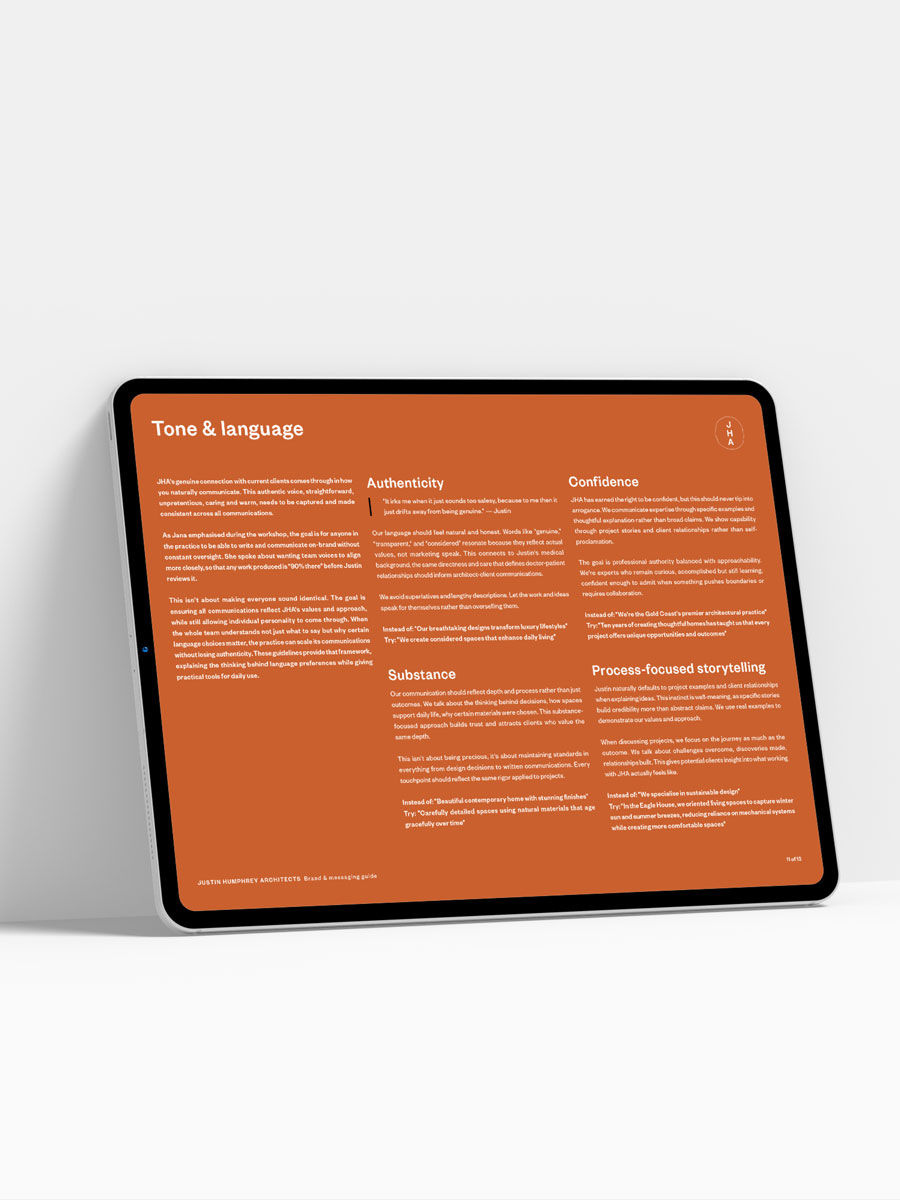
Once your positioning is clear, we translate that strategy into a practical language system. This defines how your practice sounds and ensures your voice is consistent across your website, social channels and day to day communications.
Instead of guessing how to describe your work or rewriting proposals from scratch, you have a clear framework for how to speak about your services, process and values in a way that resonates with the right clients.
Most importantly, your messaging starts to prequalify your audience. The right clients recognise themselves in how you communicate, while those who are not a good fit naturally filter themselves out.
Identity design
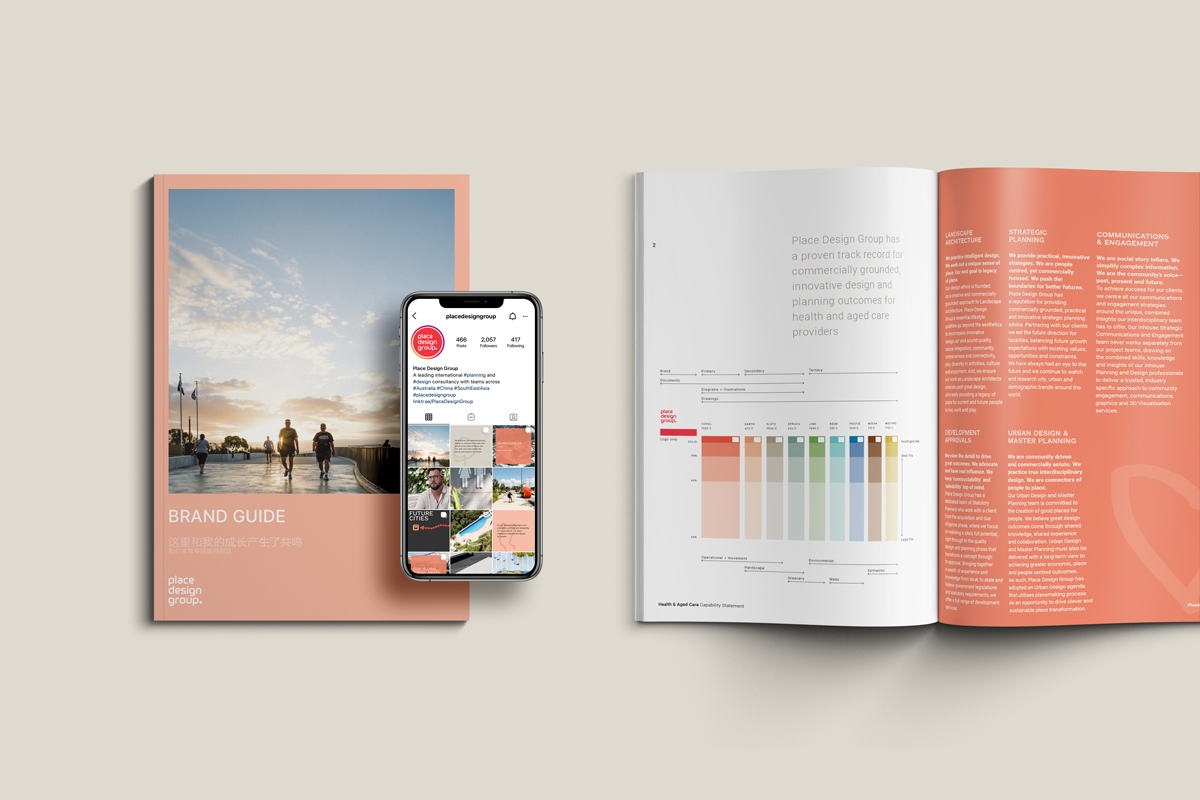
For practices whose current presentation no longer reflects their positioning, we can also develop a considered visual identity. This work builds on the strategy and messaging, translating them into a cohesive visual language across logo, typography, colour and imagery.
The real value comes from putting these principles into practice
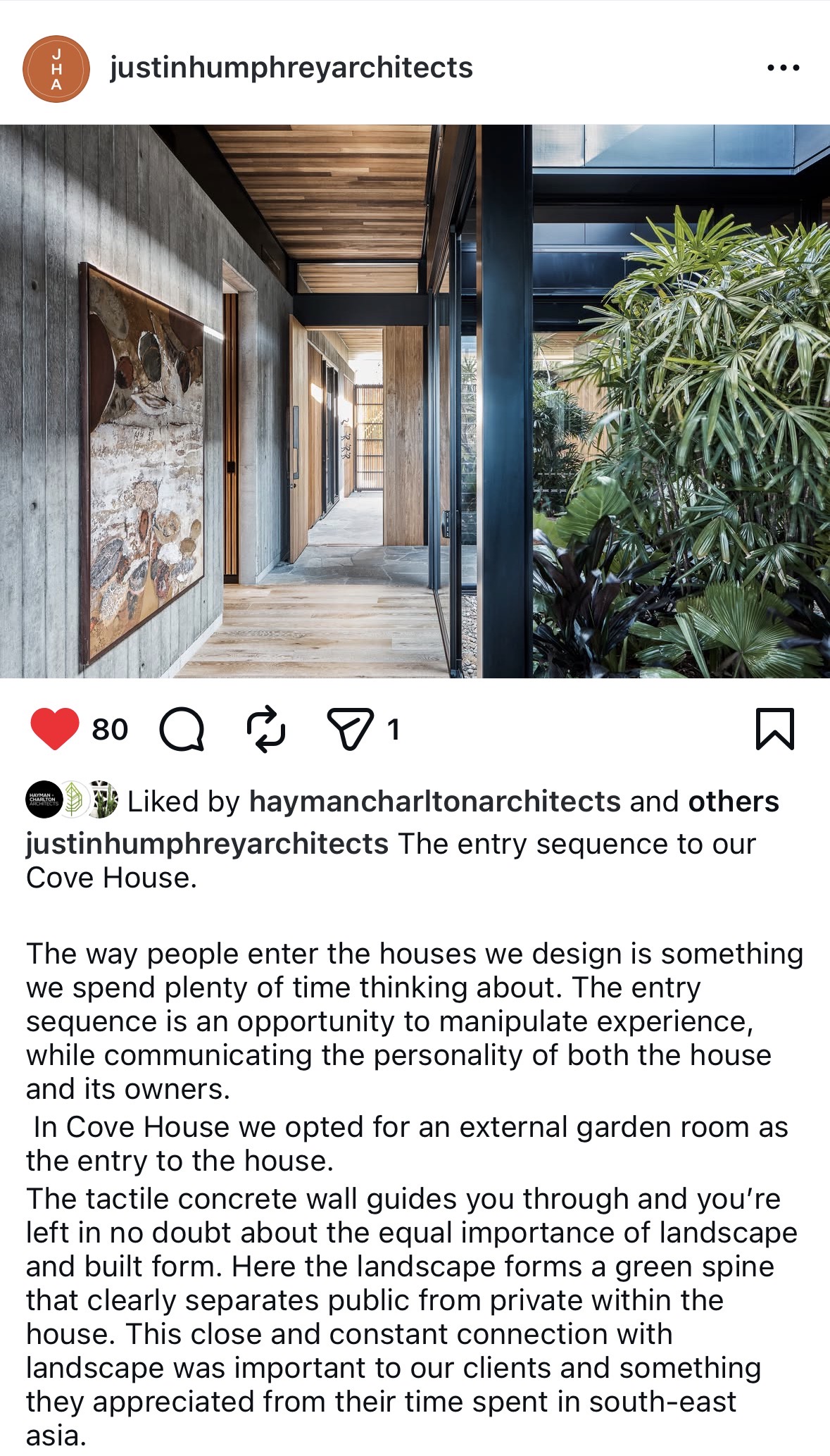
We saw this with Justin Humphrey Architects. After developing their messaging guide, they began applying more intentional language to their social posts, and the clarity and usefulness of their content improved almost immediately.