



Video content strategy
How to practically use film to connect with the right audience and clients
Content and marketing strategy tips by Nikolas Strugar
Producing a video about your project or practice is creative and exciting, but not without considerable investment. There’s weeks of concept development, planning and storyboarding. Then coordinating with everyone involved before you finally get those one or two days on location. And that’s just the beginning.
Post-production is its own journey. Assembly edit, sound design, colour grading, first cut, reviews and refinement, then the final polish and creating shorts.
Finally, your production is ready for its big premiere.
In a rush of excitement, you post it on social media, you get a bunch of likes, comments and shares, maybe even a few DMs from potential clients or your peers.
And then what?
Producing a beautiful film is a great way to document your project or process, but what if it could do much more than that?
“Having your film viewed by a small audience of the right people is preferable to reaching a large audience of the wrong viewers"
Achieving business goals
How you integrate video content into a marketing strategy is key. It plays a crucial role in getting real value from your investment and affects how well you connect with your audience and prospective clients.
So careful planning matters. What your video says about your practice and how you share it are just as important as the production itself. This is where our background in marketing and brand strategy comes in handy.
We don’t just create beautiful content. We help make sure your video, imagery and messaging actually work towards what you’re trying to achieve as a business.
Creating connection
Video content within the architecture and construction industry comes in various forms, including project documentaries, brand narratives, construction stories, short-form content, process and explainer videos, or more conceptual pieces. Each film we create is unique, yet most will embody a few key elements essential to the architectural experience.
When we create content together, we always aim to capture the emotive essence of architecture; the intangible feeling of being in a space. Along with that comes human experience, how people interact with a project. It’s this capacity to convey the sensory experience of space that distinguishes architectural film from photography.
Additionally, videos often incorporate interviews or voiceovers with architects, builders, homeowners or others using the building. Conveying the relationships and connection between people is an often underestimated benefit of video content.
All these elements are significant for attracting future work or developing your brand positioning, because prospective clients can visualise themselves within the spaces you design. Watching and listening to you speak on screen helps establish a connection and allows them to imagine themselves collaborating with you, working together with shared values and ideas.
Film is not merely a visual representation of your project, but a narrative medium that resonates with viewers on a much deeper level.
Which naturally leads to the question: do we need as many viewers as possible?
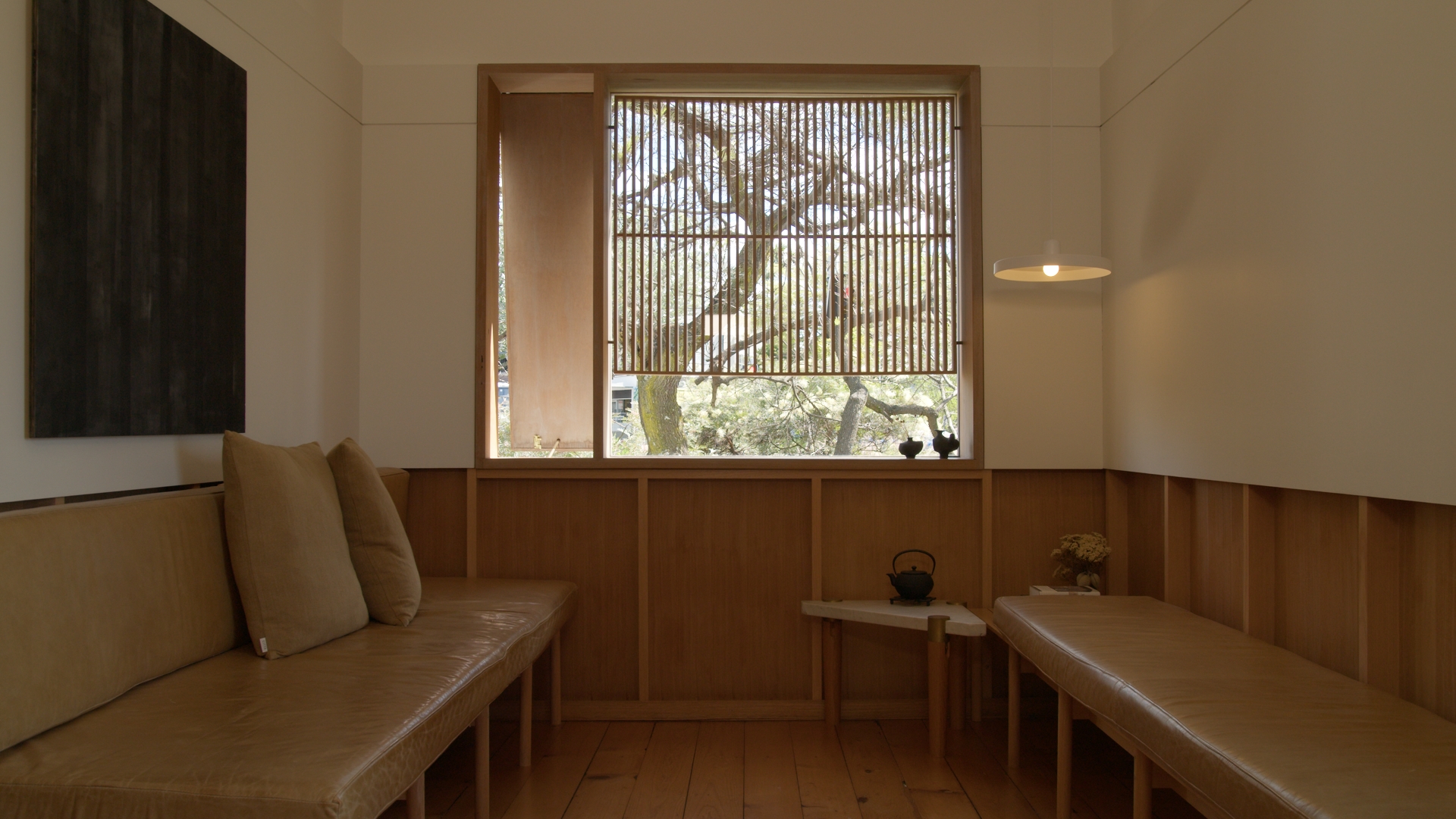
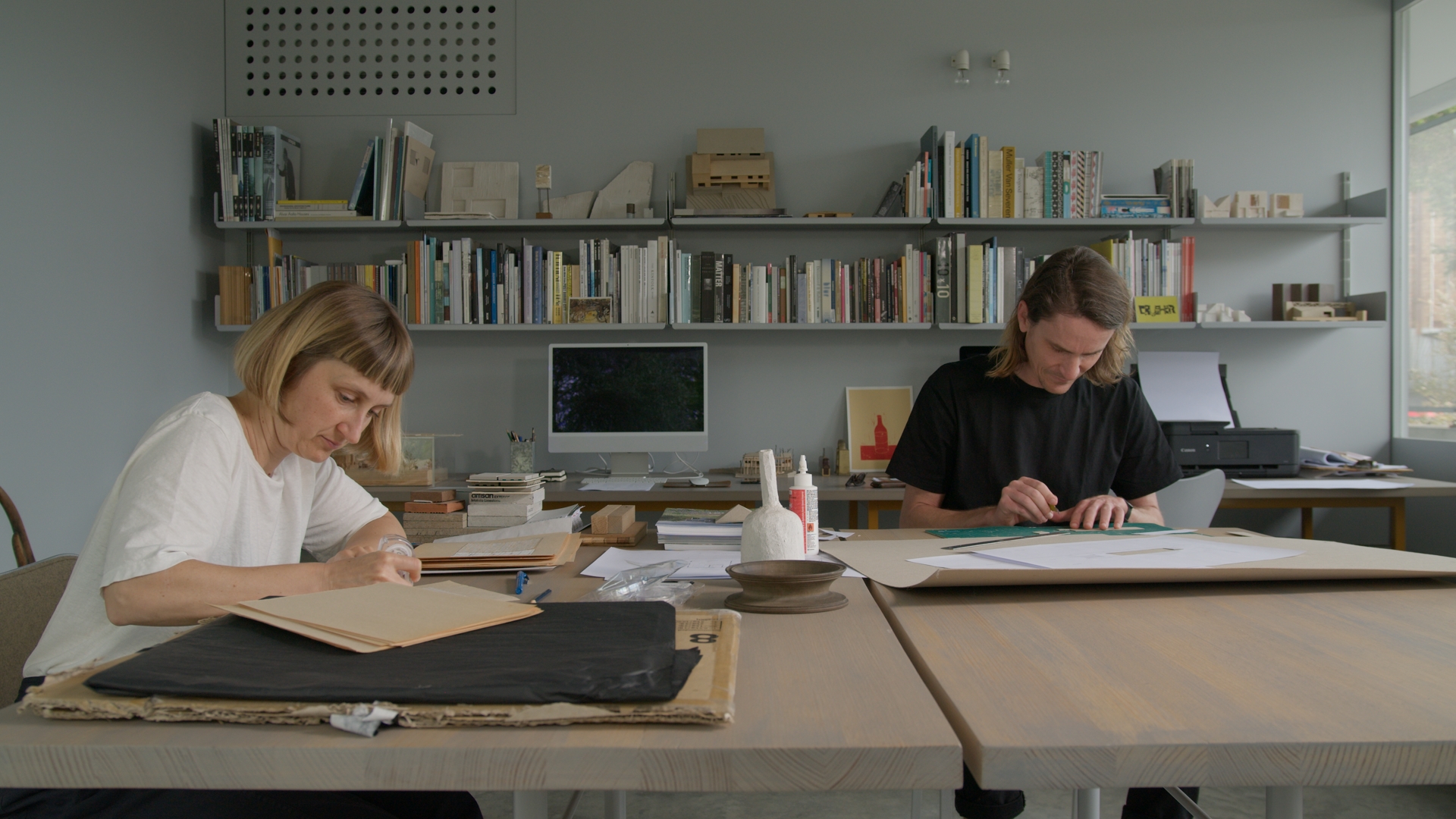
Our recent video production for Zuzana & Nicholas’ Red Hill House & Studio
It’s not all about numbers
This may come as a surprise (or a relief) but the numbers don’t always matter.
Everyone would love their video to go viral, and we’ve produced a couple of films that have. But thousands of views or followers on Instagram or YouTube rarely indicate whether a video actually succeeded. While a high view count is gratifying, it may not be the ultimate goal.
Working out the exact monetary return on a video is tricky. It’s rarely straightforward. You’ve got the platform to consider, how different campaigns work together, how the impact builds over time, and how the video fits with everything else you’re doing marketing-wise. It all adds up to make things pretty complex.
If you have the budget and desire to invest in a Google or Meta ad campaign to get your video in front of as many people as possible, then go for it. It’s a proven strategy, but it can be costly. We don’t recommend this though unless you’ve got the foundations sorted first. Things like website structure and core messaging, a fairly consistent social media presence, and some way to nurture those leads from cold audiences through to actual clients.
Fortunately, there are other ways to get the most out of your video content. And in fact, we always tell our clients that the following approaches should be implemented first before launching into paid ad campaigns.
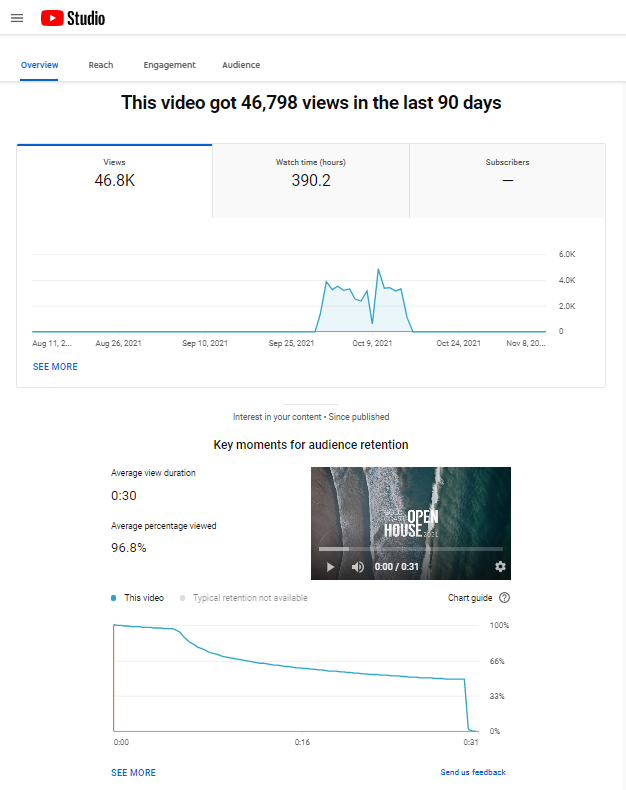
Stats from our Gold Coast Open House 2021 campaign video
Your audience matters
Having the wrong audience view your film may even be detrimental.
Picture this: you release a film on a channel with millions of viewers. The likes, comments and followers skyrocket, and you’re inundated with new enquiries from potential clients who are the wrong fit.
They might love the building in the film you shared, but what they’re actually after is something completely different. Maybe it’s a budget reno when you’re focused on high-end residential. Or they want a quick extension when you specialise in a more considered approach. The aesthetic drew them in, but the reality of what you do and how you work doesn’t match what they need.
And sure, there may be one or two potential clients in the mix who are right for you, but it’s going to take a bit of work to filter them out.
But there are other ways to attract new clients with an architectural film.
Reaching the right people
Having your film viewed by the right audience, even if viewership is modest, is preferable to reaching a large audience of the wrong viewers. Targeted distribution beats casting a wide net and going for volume every time.
Direct engagement techniques are the most cost effective and high yielding. You don’t need to spend time tracking and analysing the metrics of in-depth ad campaigns. Instead, you can focus on putting your video where your ideal clients will actually see it and engage with it.
So, where to start?
Start with social
Even though we’re not chasing likes and follows, you’ll still want to share the content on your social platforms to maximise its organic reach. Having the content on your social channels is a form of social proof, and is great for new clients who are at the beginning of their design journey.
Posting your video on social media is a little more involved than just captioning the project name and a short poetic description.
Thoughtful captions that go beyond surface aesthetics are ideal. In most of our productions we’ll provide several short cuts of a video that speak to different aspects of a project or practice: client brief, client relationship, the evolution of a project, design thinking and philosophy, the challenges and complexities that were overcome, practice ethos and values.
Think about who your intended audience is. If you’re looking for new work, it’s not other architects. Speak to your ideal customer. Explain through the caption what made the project special, how it suited the client’s lifestyle, how it improved their day to day living.
Taking some time to think about these things and aligning them with each post or reel will greatly increase engagement. It’ll also provide insight into your approach for when a potential client decides to do a deep dive through your content before they make their final decision to go ahead with you on their project.
With what you want to say mapped out, it’s time to think about when and how often you will post your content. Following is an example of an ideal strategy and one we often implement on our own social channels.
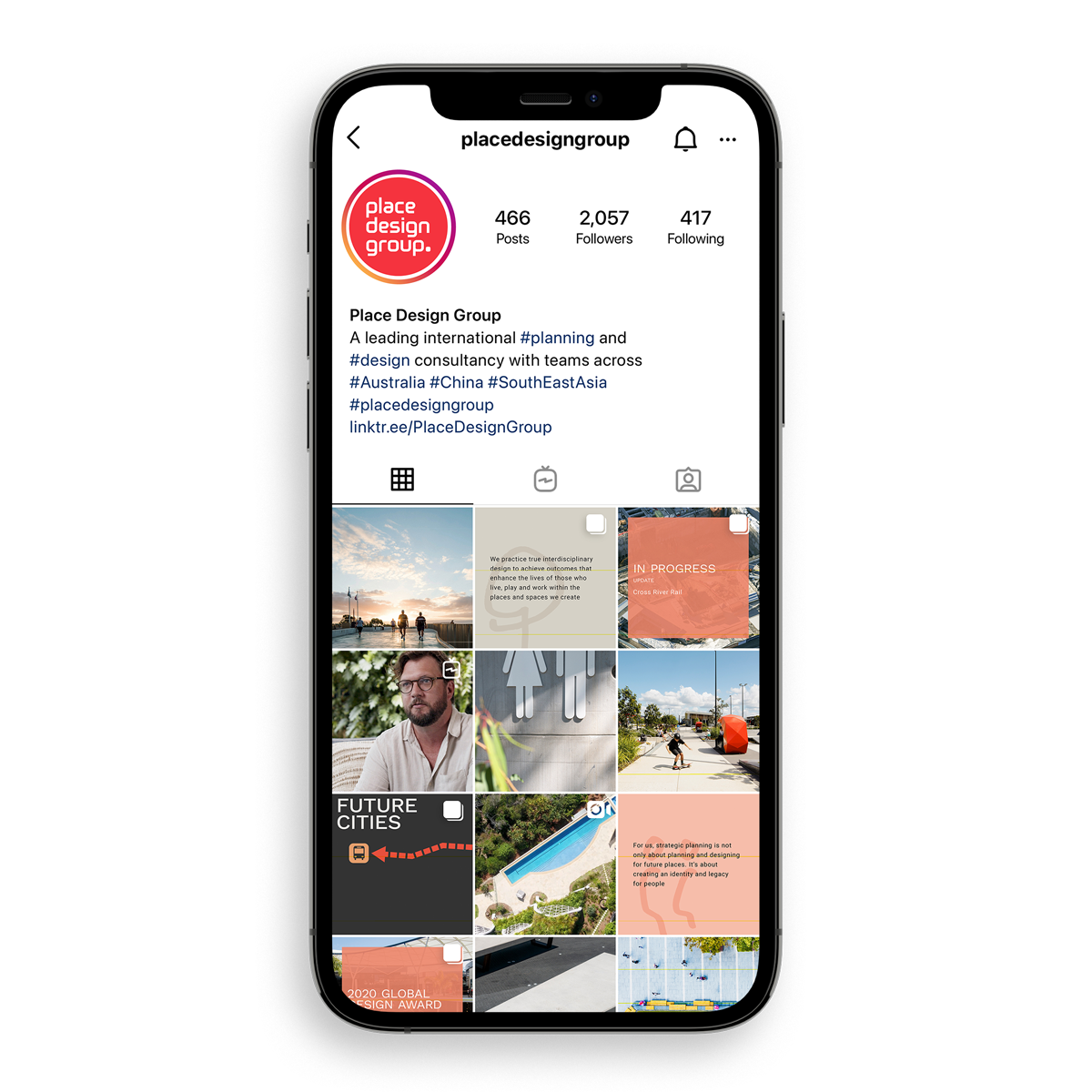
Instagram strategy for Place Design Group, 2022
Instagram posting strategy
The first thing to note: repetition is key.
Due to the dynamics of social media algorithms, most of your followers are unlikely to come across your posts organically in their feeds (only about 10–15% of your followers on Instagram will see your content organically). These algorithms prioritise content based on various factors, leading to limited visibility for individual posts regardless of the size of follower base.
So you can never share your content enough. Regular and repeated posting will help get the most out of your videos.
If you’re just starting out with social, or you have an established presence but are struggling with consistent posting, we’d recommend going for consistency over high frequency.
Rather than setting yourself a goal of several posts per week and stories every single day, start small. Try posting once a week for a few months and get into a sustainable rhythm, and increase it from there. A good rule of thumb which suits most small to medium practices and organisations is 4–5 posts per fortnight.
When it comes to posting your new video, think of how you might roll out the content over several weeks. Mix it with photography from other projects, as well as posts about construction, process, practice values, people and culture, upcoming events or awards.
We’ll use Instagram as an example here, but this approach can apply to all your channels.
Week 1: Build anticipation Post a short version of the film and share the post to your story. Follow up later that week with another short snippet on your story so as to not compete with the previous post’s algorithm.
Week 2: The premiere Post the full cut. Even though most people may not watch it to the end, there’ll always be a few audience members who do. They may just be that prospective client you’ve been talking to recently and this could be the insight into your process that does it for them. A day later share the post or another snippet to your story.
Week 3: Keep momentum Post another snippet as a Reel, driving attention to the previously posted film. Also share the reel to your story. You could even re-share the previous full cut post to your story. Remember not everyone will have seen it the first time.
Week 4: One more time Post another snippet as a reel or story. Then if it feels like you’re at saturation point, leave it for a few weeks. Every few weeks or months, post another snippet or the full film again.
YouTube and Vimeo
Hosting on YouTube or Vimeo will allow you to leverage the film in many different ways which we’ll cover shortly.
Starting a YouTube account is free. Vimeo also has a free option, but paid memberships offer greater flexibility. In our experience, Vimeo is the better option for hosting video content as it provides a cleaner and more seamless method for sharing and embedding content on other platforms.
Vimeo will serve as your primary hosting platform, allowing you to generate a link that can be easily shared or embedded elsewhere.
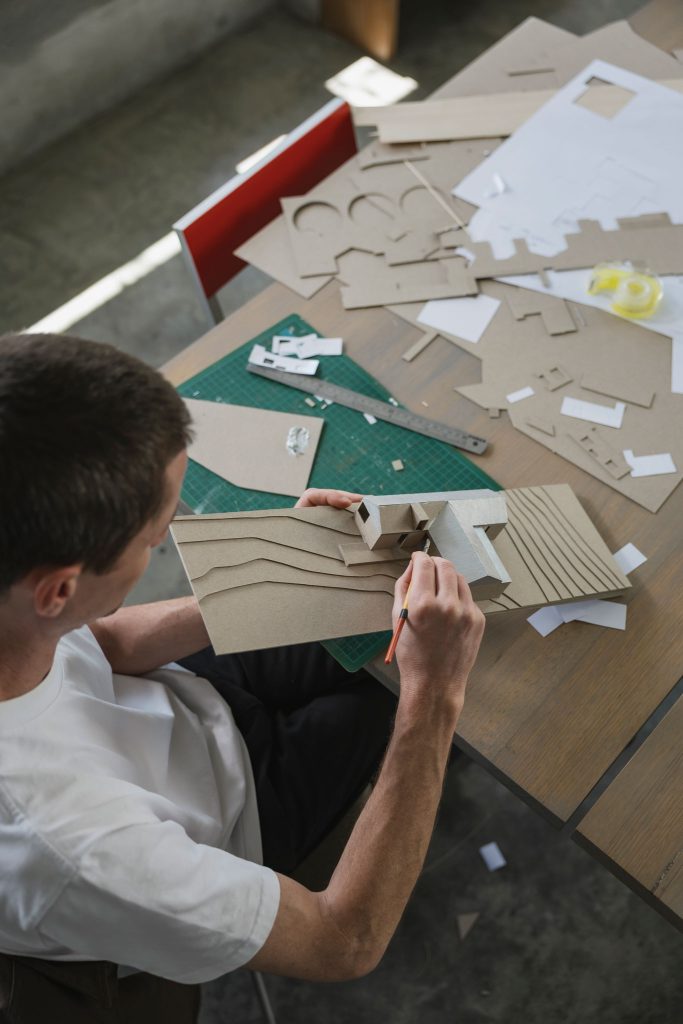
In the studio with Zuzana & Nicholas
On your website
Embedding videos on your website provides a dynamic way to enhance user experience and effectively showcase your work.
For instance, a short reel could be featured on the homepage as a background video set on loop and autoplay, offering an immersive sensory experience of your projects. A full-length video could be displayed elsewhere on the homepage, allowing users to click and play for a more in-depth view of a specific project or story about your practice.
Videos can also be included on relevant project pages or your About page to provide deeper insight into your approach. With videos embedded onto specific pages and the right messaging around them, your website becomes a powerful communication tool which can be leveraged in the following ways.
A homepage video loop we created for Shaun Lockyer Architects
Direct email outreach
Many of our clients have told us that sending their prospective clients a link to a project film played a crucial role in securing new work. Often signing up one or two new projects within weeks of a film’s release.
Imagine you’re talking to a client who is considering your practice for their next project. Maybe you’ve already had an initial conversation, discussed project scope and fees, and they seem like a good fit.
You’ve recently completed a similar project, and you have it on your website with photos and a project film featuring prominently on the page, along with a thoughtful description of the process and client involvement.
Sending them a link to this page could be the crucial step in securing this next job. A project film is an immersive way for new clients to experience what your projects feel like to occupy. But more than that, a project page with a detailed story about the process shows them what it would be like to work with you.
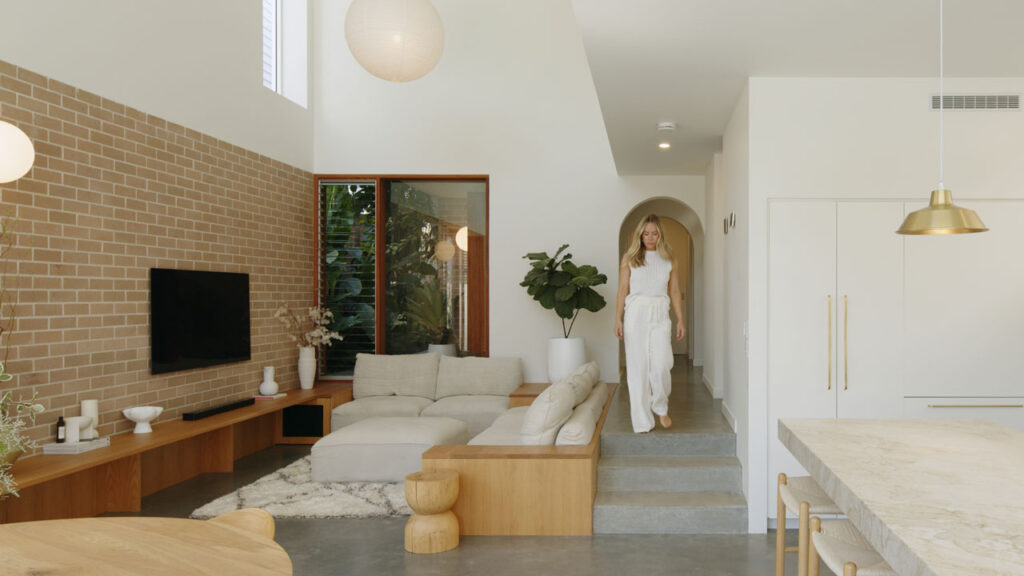
Freihaus by Gockel Architects
Email newsletters
A regular email newsletter is a great way to keep in touch with clients and prospects at a more personal level than social media. Again, we’re not aiming for volume here, but consistency. Quarterly or bi-monthly might be a good place to start, and you can increase the frequency as you get a handle on it and see that it starts working for you.
Platforms like MailChimp are user friendly, and their templates are easy to tailor to suit your brand. They’re also a great place to link a recent film.
You could link directly to the film on YouTube or Vimeo, however linking to a project page provides more context and can lead to further engagement with your other work.
Email signatures
A colourful thumbnail with a play button is eye-catching and could be the perfect 3-4 minute distraction your recipient is looking for as they trawl through their morning inbox. This is a good place to link directly to the film on Vimeo.
Links in documents
When you’re putting together proposals, EOIs or capability statements, video can be a powerful addition. These documents often need to communicate a lot about your practice in a short amount of time, and a well-placed video link can do the heavy lifting.
If you’ve received a proposal from us recently, you’ll know that this is something we do all the time.
Proposal docs can be lengthy. So including a film upfront is a great way to communicate your project or practice ethos in a short space of time, and in a more engaging way. This allows the reader to then delve deeper into the finer detail of a proposal after a broad introduction to the topic, whether that’s a project or a process.
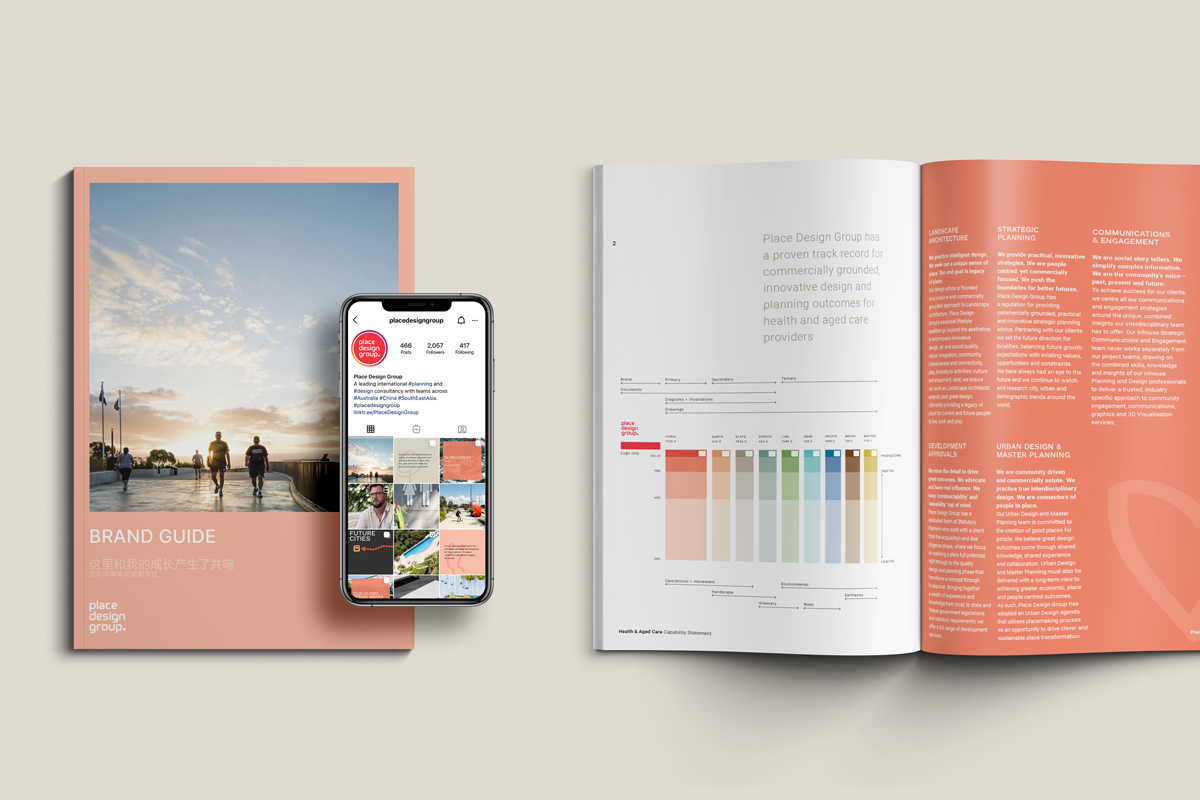
Document template for Place Design Group 2022
Making your video work
Video content can be so much more than a one-time social media post. By thinking strategically about where and how you share your films, you can turn a single production into a powerful tool for attracting the right clients and building meaningful connections.
The key isn’t chasing viral moments or massive view counts. It’s about getting your video in front of the people who matter: those potential clients who align with your values, appreciate your approach, and have projects that match your expertise. Through thoughtful distribution across social media, your website, email outreach and professional documents, one well-crafted film can work for your practice for many years.
Every architectural film tells two stories. There’s the story of the building itself, but there’s also the story of how you work, think and collaborate. When you get both right, that’s when video becomes genuinely valuable for your practice.