


Communicating clearly
What you should know about speaking on camera
Production tips by Nikolas Strugar
After producing over 100 architectural films in the last five or so years, you start to notice a few things. We’ve learned a lot about lighting, pace, editing—and patience, especially waiting for the clouds to pass or the family dog to get through their 20th take. But what’s had the biggest impact isn’t the technical stuff. It’s how we approach communication.
The most memorable films don’t just look good. Built around a clear idea, and told in a way that feels natural, not forced, the best films make you feel something. And they reflect the values of your practice. Interviews and voiceovers have become important tools for this. They help translate abstract design ideas into something people can relate to.
“It’s not about being perfect—it’s about being clear”
What makes communication work (and what doesn’t)
The word communication comes from a Latin root which means ‘to make common’—it’s about making ideas common and connected.
Matt Abrahams, a communication expert and lecturer at Stanford, shared a few things that really stuck with me in a recent episode of Modern Wisdom podcast. His thinking reinforced some key parts of our process when working with architects on video productions, and offered clear insights into how you can prepare for an interview or voiceover with more confidence.
One of the first things he said was: “It’s not about being perfect, it’s about being clear.” That’s a big one. In most of our productions, we rarely aim for a perfectly polished performance. Architects just want to express what the project means, why it matters, or how it works. But clarity often gets lost in overthinking. And our job is to help pull the message into focus without turning it into a scripted performance.
Matt talks about speaking in headlines—short, structured ideas that people can take in easily. We’ve found this is especially helpful in interviews. Long, winding answers can be fine in person, but in a film they tend to lose impact. One strong sentence often carries more weight than a paragraph. It also helps with cutting an edit, making the film feel concise and purposeful.
Another point that really resonated: “Don’t memorise. Internalise.” The best interview moments come when people speak naturally, not when they’re trying to remember lines. Matt talks about how trying to recall scripted words can lead to cognitive overload—essentially, your brain is too busy retrieving the exact phrasing to focus on delivery or connection. In our interviews we create a space where people can talk like themselves. Where their tone, their language, and even their hesitations, are true to who they are.
One of Matt’s simplest but most helpful reminders is this: “You are not delivering a presentation. You are having a conversation.” That mindset helps people let go of performance and focus on connection. And that’s the tone we’re aiming for when the camera starts rolling.
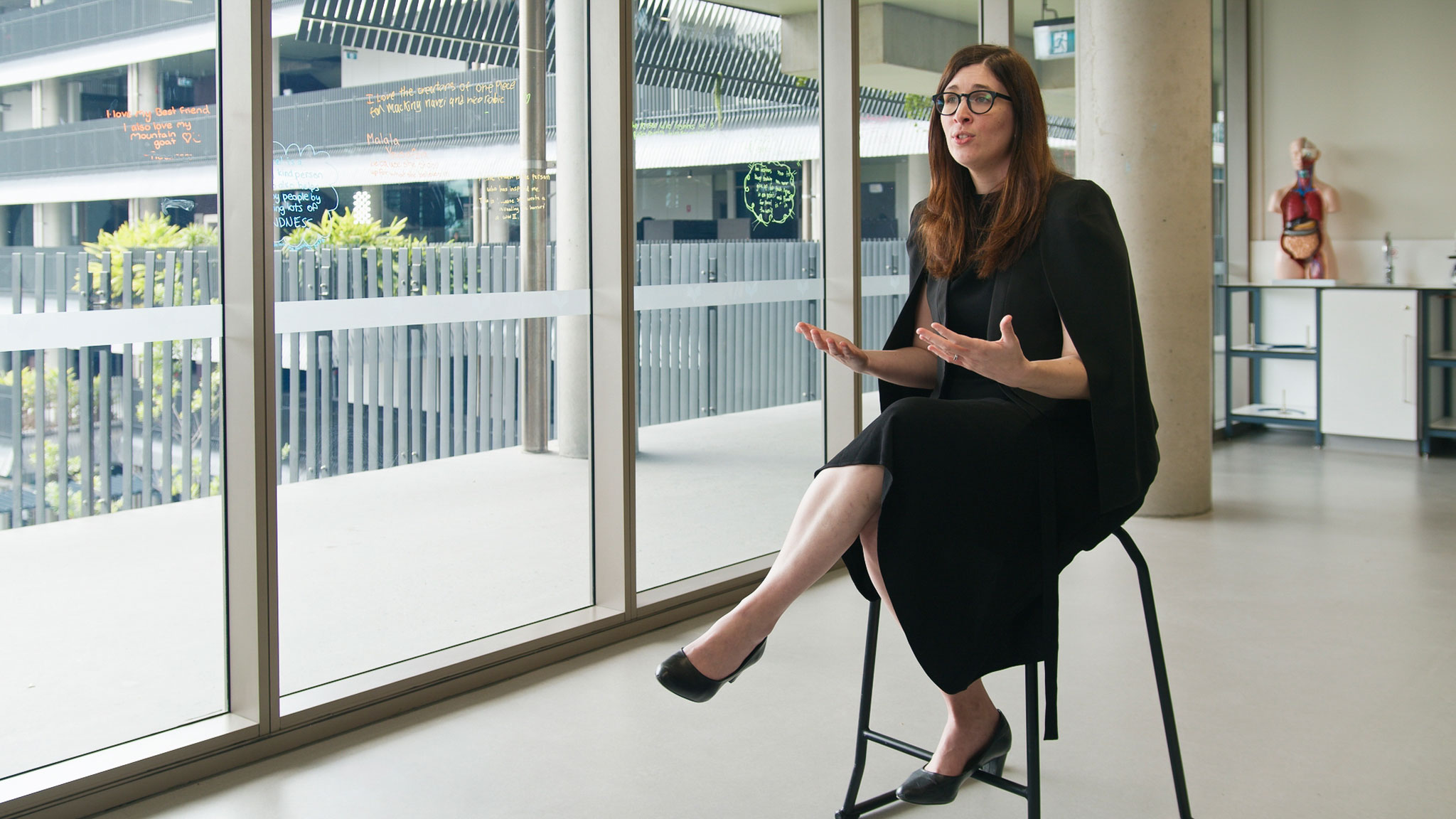
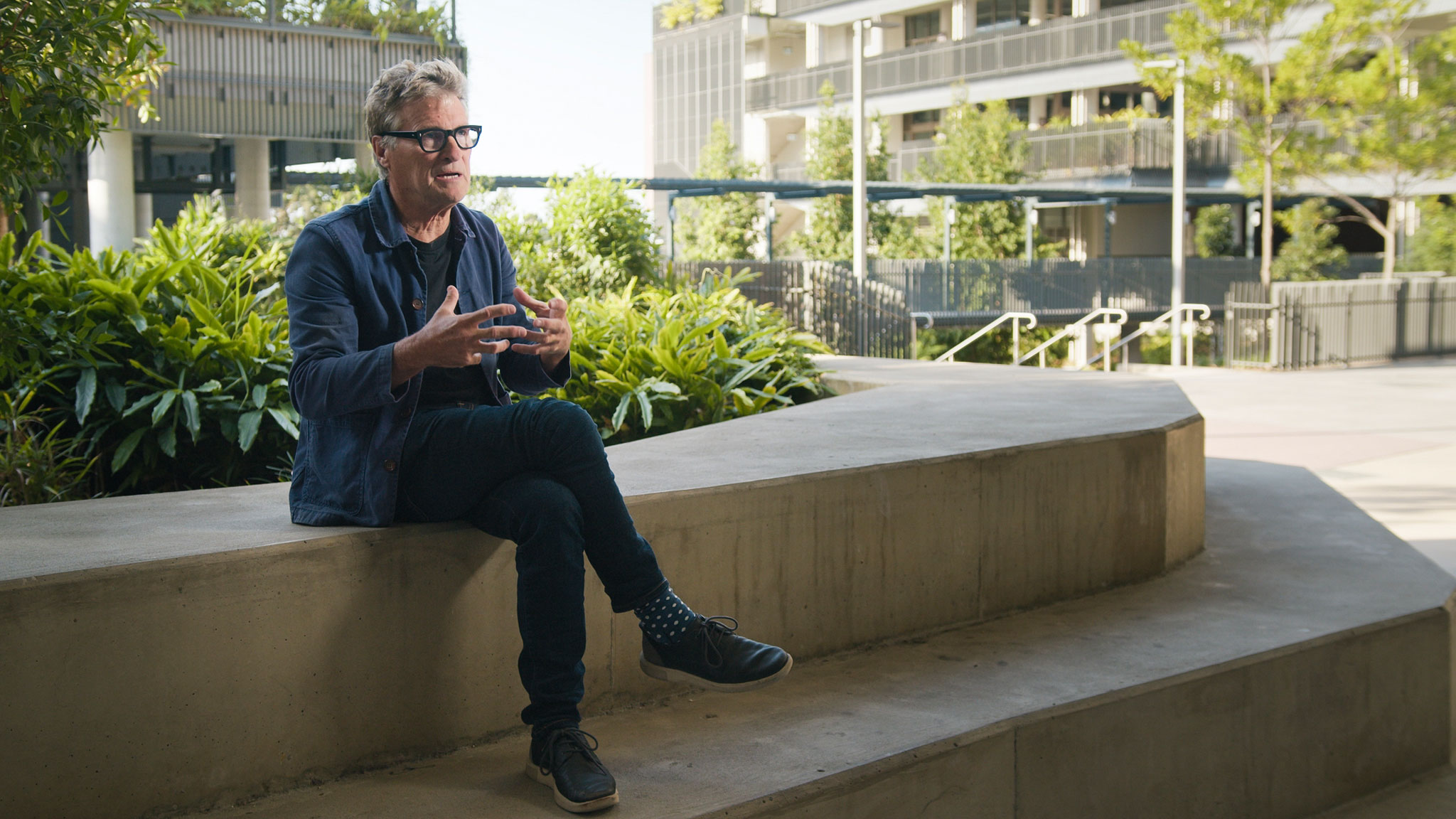
But before we hit record...
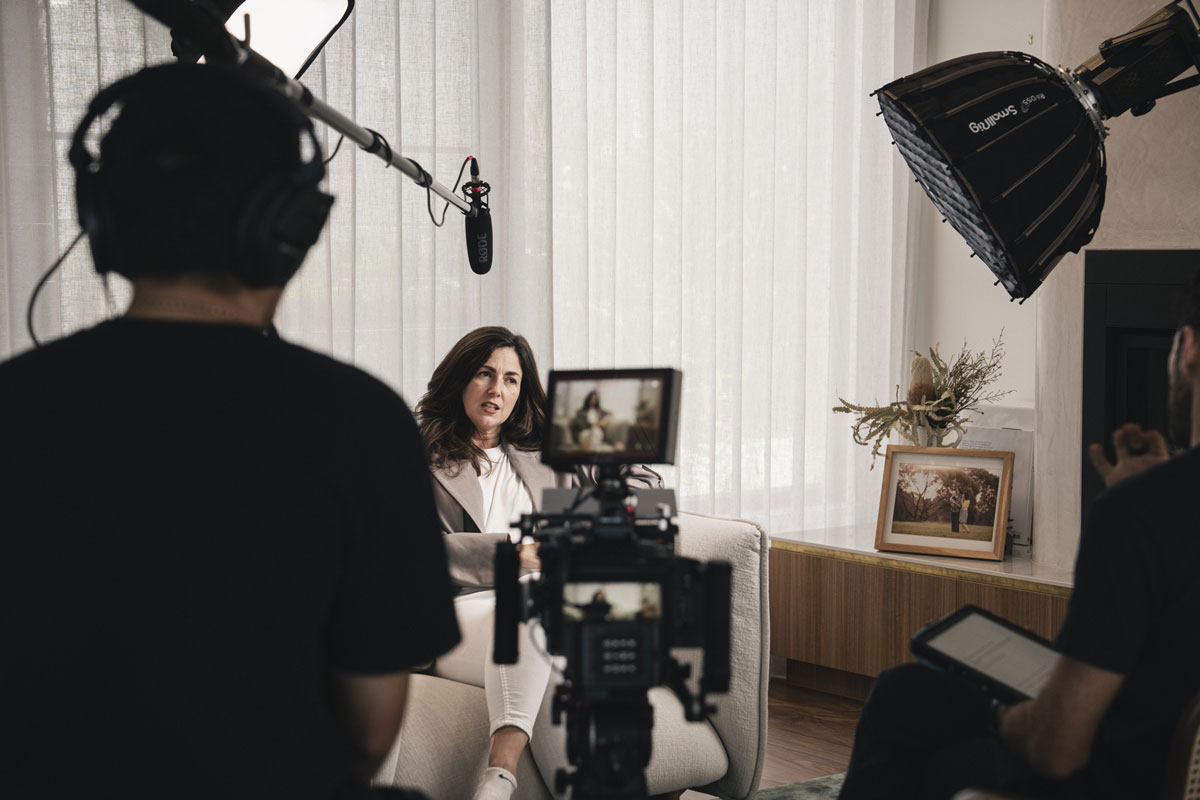
Good communication starts long before we sit down in front of the camera. In preproduction we’re thinking about who the audience is, what the core message might be, and what tone fits. It’s not just about information. It’s about intention.
The aim of an architecture video isn’t just narrating buildings. It’s about expressing ideas. A film is a chance to say something bigger about how your practice works, what drives your thinking, or how you approach design. It’s a storytelling tool. That doesn’t mean the language has to be deep or philosophical. It just has to be grounded and clear.
We’ll always tailor the interviews or voiceover to the type of project. A public space film might have a different tone to a home, or a campus masterplan. Context shapes the message.
How to prepare for clear communication
If you’re thinking about being interviewed or recording a voiceover for your next project, here are a few questions worth asking:
- What are you trying to say?
- What does your work stand for?
- How do you want people to feel when they see your work?
Spending a few minutes reflecting on these can shift how you speak, and help shape the direction of the film.
Some practical ways to figure out what to say and how to say it:
- Record yourself speaking casually about a project—then play it back and pick out what feels most natural.
- Rephrase what you’d say as though you are speaking to a friend or client—not a critic or an awards jury.
- Don’t aim to sound poetic. Just be clear.
In my opinion, the most purposeful way to communicate is to be direct and to the point. I often quote a lyric by Tim Freedman of The Whitlams, in the song Coming Over from their 2002 album Torch The Moon:
“Can you divide the meaning, by the number of your words?”
It’s a brilliant question to keep in the back of your mind when preparing to speak. Especially on film.
“Can you divide the meaning, by the number of your words?”
Further reading
If you want a better sense of how we approach interviews and voiceover, have a look at our Production Process guidelines. And if you’re not sure what you want to say in your next film, that’s okay, we can help figure it out together.